Loss of a Sense of Security
The CallerLoss of a Sense of Security is the damage inflicted when a threat reaches beyond its immediate target and makes ordinary life feel unsafe. In the novel, that loss begins with the intrusion into the Sundelins’ home and radiates outward through a campaign of staged scares, false reports, and surveillance. Konrad Sejer describes the harm as a theft: the parents’ security has been taken from them, leaving consequences that cannot be measured by whether a prankster intended physical injury.
Meaning and stakes
The idea is first made concrete through the contrast between Lily Sundelin’s confidence in her bond with her baby and the vulnerability of the home around them. While preparing food, she feels certain she would know immediately if Margrete stirred, sneezed, or began to cry; their connection seems as dependable as a mooring line. The attack overturns that assurance. A person has learned the family’s routines, watched the house, and chosen a moment when Margrete is sleeping. Jacob Skarre’s assessment emphasizes the planning: the perpetrator may have observed the household over time and anticipated both the baby’s sleep and Lily’s reaction. The calculated nature of the intrusion matters because it transforms familiarity itself into a source of danger. The family’s home and daily habits no longer seem beyond an outsider’s reach.
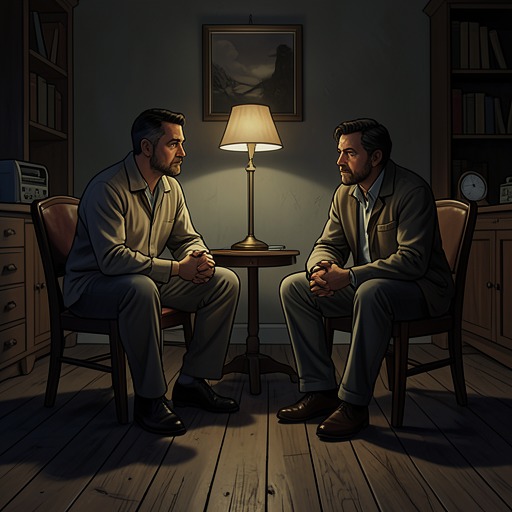
Sejer’s explanation to a group of boys gives this harm a precise moral shape. The attack is not harmless merely because it is called a prank: it deprives the parents of the security that makes ordinary life possible. The distinction shifts attention from the perpetrator’s claimed amusement to the lasting condition of the people targeted. Security is presented not as a luxury but as the background trust that allows a family to sleep, work, and care for a child without constant vigilance.
The Sundelins after the attack
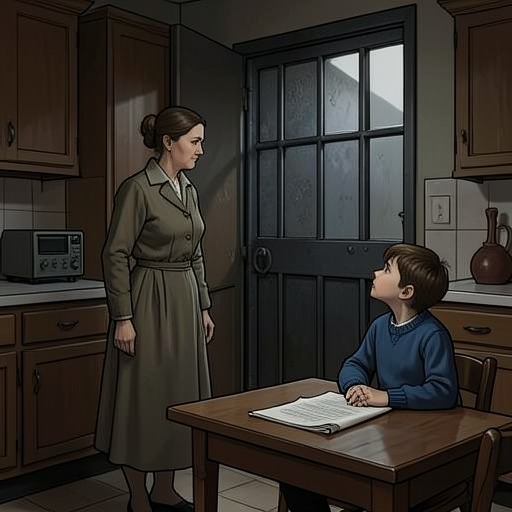
Weeks later, Karsten Sundelin wakes at half past three and discovers that Lily and Margrete are not in their bed. He finds them on the lounge sofa in the darkened room, with Lily holding their sleeping child. Karsten senses that something unfamiliar has entered the house and now lies between the couple, an unspoken, shadow-like pressure. The empty cot in the bedroom has become more than a practical detail: the family has moved Margrete closer, while Lily’s fear has drawn her into a vigil Karsten cannot simply end.
Their conversation shows how differently the parents experience the same danger. Karsten wants life to return to what it was and believes that, once the offender is caught, justice will restore normality. Lily rejects that expectation. Anything may happen, she insists, because the intruder came while they were eating and they did not hear him. Her fear is rooted in a demonstrated breach, not merely in a failure to reassure herself. When Karsten suggests sleeping pills, she refuses because she needs to remain alert; his promise that he will wake at the faintest sound cannot undo the fact that the previous intrusion went unnoticed.
The attack also changes the marriage. Karsten sees Lily establish herself on the sofa with Margrete and realizes that reassurance cannot reach her as it once might have. He holds back what he wants to say about sleep, work, and their daughter growing up, then makes tea instead. His practical care remains, but the emotional ease between them has receded. The loss of security thus becomes relational: the danger is gone from the immediate scene, yet its effects organize where Lily sleeps, how she cares for Margrete, and how far Karsten can approach her fear.
A method that makes people watchful
The wider intimidation campaign extends this damage beyond one family. Its methods depend on selecting vulnerable moments and exploiting information about everyday routines. In discussing the false alert involving Frances Mold, Sejer observes that her name and address were available in a newspaper profile, but that the caller also needed to know she would be away on her scooter. He suspects the prankster watched the house and timed the call accordingly. Frances’s mother, Evelyn Mold, recalls being so overwhelmed at the hospital reception that she would not have noticed someone watching her. The scheme makes public information, familiar routes, and distracted moments feel like openings through which an unseen observer can enter a person’s life.
A separate scene places Frances alone on the Love Trail as Johnny Beskow lies concealed in the undergrowth with an army knife. He waits for surprise to paralyze her, turning her ordinary ride into a situation of immediate physical danger. The image makes explicit what less visibly threatening hoaxes also imply: the target may not know when observation ends and an attack begins. Across the campaign, fear is produced not only by what happens but by uncertainty about who is watching, what has been planned, and which familiar setting will prove unsafe.
Fear spreads through the community
The effects are not confined to direct victims. Gunilla Mørk, shaken by a fabricated obituary, says that seeing her own death notice made her world tremble and left her uncertain of anything. She had thought she had good years ahead; afterward, the paper’s announcement feels like a bad omen. Each morning she reads the clipping she framed in a small silver frame and takes satisfaction in still being alive. The ritual is both a response to fear and a way of asserting the fact the obituary falsely denied.
The press and the community give the campaign another route into public life. When journalists gather over the baby case, Sejer worries that dramatic reporting may give a criminal the attention he wants; Jacob Skarre counters that ignoring the offender might make him angrier or more dangerous. Neither possibility offers an easy way to restore confidence. Later, residents’ suspicions attach to Bjørn Schillinger, whose own claims of sabotage Gunilla dismisses. She believes the actual prankster has displayed creativity and style, while Sverre Skarning defends Schillinger as meticulous and certain to secure his dogs. The campaign therefore damages trust in two directions: people fear the unknown perpetrator, then begin to doubt one another as blame spreads beyond what they can establish.
A wound, not an excuse
Johnny Beskow’s own circumstances offer context for the atmosphere of insecurity without cancelling his responsibility. He grows up amid his mother’s heavy drinking, hostility, and neglect; he resents her demands that he find work while he sees little prospect of independence beyond riding his Suzuki. When she tells him that his pet rat Bleeding Heart is dead, he trembles and accuses her of taking it from its cage. These details show a young person accustomed to humiliation and loss, but they do not make the fear he creates for others harmless. Later, while required to report to the police station three times a week because he is a minor, Johnny admits to Sejer that scaring people was fun and calls it a game, while insisting that he never meant to hurt anyone. Sejer answers that people were hurt badly, perhaps for life.
That contrast defines the concept’s full force. Intent and consequence do not match: a perpetrator may regard fear as play, while those targeted lose the freedom to treat home, sleep, roads, or news as ordinary. The campaign’s most lasting injury is this altered expectation. After repeated violations, safety can no longer be assumed simply because a room is familiar or a warning is supposed to be false; it must be questioned, guarded, and painfully rebuilt.